Friday, 25 December 2015

MERRY CHRISTMAS

Firstly, Merry Christmas!

This is just a quick post to wish you all a Merry Christmas and share with you my favourite Christmas advert of this year. It is not one that is plastered over the TV, yet a Mulberry tradition for the past year or two.


I just find this advert quite hilarious yet very clever. It takes the famous Baby Jesus narrative and turns into something of their own. Magical, and quite the #MulberryMiracle

Once again, Merry Christmas!

Monday, 21 December 2015

NYC PLANNING

With only a few weeks until I go on a trip to New York, which has come around quicker than imagined, it is about time I began planning on what I hope to do whilst I am in New York!

BROOKLYN:
Trust me to start with the one that is the furthest away! It is an area of culture packed with exciting things to do, eat and see. For me, visiting Brooklyn Bridge is a must, and being able to experience the subway to get there is another bonus!


UPPER EAST SIDE:
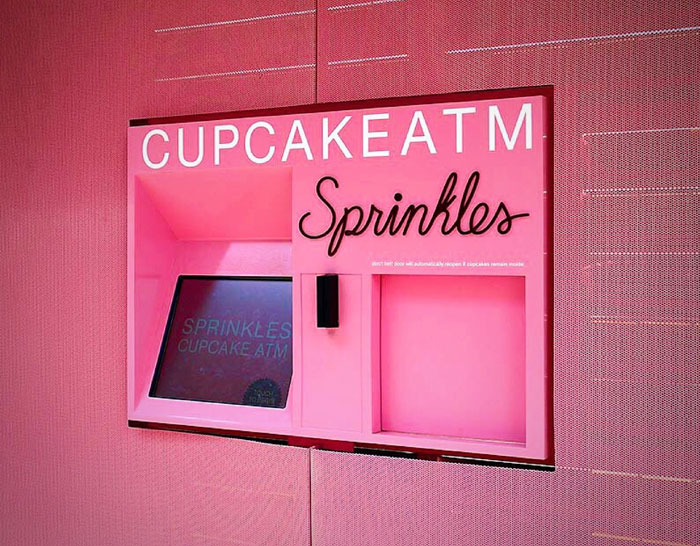
I can completely fan girl and pretend I am Blair from Gossip Girl, what more could I want?! This is one the areas I am most excited about going to, not only for the Gossip Girl reasons (try to believe me) but there are plenty of things to see and experience in and round this area also. Near to Central Park, so I can ice-skate and obviously visit the Metropolitan Museum of Art to then doing a spot of shopping and go to the ever famous cupcake ATM!


AND EVERYTHING ELSE TOURISTY...
like going up the Empire State, or The Rockefeller, or going to Times Square and obviously going to Sephora!

Tuesday, 15 December 2015

SUMMATIVE BRIEF - ADVERT COMPARISON

As part of our overall module grade, we have been set an individual brief to do over the Christmas break based upon brands and retail. The brief is called 'Market Visual Awareness' in which we visually analyse different aspects of the fashion industry.

From our previous trend work that we have done, we have been asked to choose one category to focus on for the whole of this brief. From our research, we had the choice to choose from check, herringbone, fur, the wrap coat or the trench coat. I have chosen to look at fur as the main category as I feel that it is an opened ended option in which I will be able to explore and look into at a further depth.

The brief is split up into three-
1) Brand and Retail Promotion Visual Analysis
2) Visual, Historical and Cultural Analysis
3) Contextual analysis, Idea and Concept

Further to this, each task is then split up into further tasks. The one that I am focussing on first is task 1a, in which I have to compare two adverts from a different market level.

Through research, I have found a variety of examples from a high end market level. I have found for sourcing these images, the best way personally is to search using pinterest, then click on an image example. This takes you to the original source/website which then houses more examples.


A website which I have found particually helpful is:

As it has picked out some of the best current advert campaigns. With such a choice and variety of ads, it made it easy to clearly see which ones included my topic that were still edgy and interesting enough to analyse!

I found finding advertising campaigns at a mass market level to be much more difficult. When searching on Pinterest it was only ever editorials on offer, with the odd advertisement that didn't fit my category of fur. I resulted to doing a simple Google search, and after a while I began to find a couple of examples. Here are the best two that I felt were appropriate for my research:


Friday, 4 December 2015

TIME MANAGEMENT

Every Thursday, we have a 45 minute session with Teaching Assistants, who have not long graduated off the FCP course themselves. This allows us current students to be able to relate to them, and talk about any issues we are concerned with, instead of speaking to our course leaders.

The session last week was on time management, as this was a subject that a lot of people felt they needed help with. It can be hard to balance going to uni, doing the work outside of uni both independently and within a group, having a job and then trying to find time to have a life and go home.

Personally, I feel that my time management is fairly good. I can meet deadlines, get the work done and still find time to relax at the end of the day. Although, after work- the end of the day is usually 9pm! But none the less, it's still time.

As with everything, there is always room for improvement. The best way for me to organise myself is to write things down. I always know exactly what I have to do, but when it's wrote down, I know I can't forget. Seeing a list of things to do, and being able to tick them off throughout the day is very satisfying! I used to just do this on a bit of scrap paper, but I have now found an alternative- this 'Daily Journal'. Not only is it beautiful aesthetically, but it is very practical as well!


Each page is split up into sections. You can add the date yourself, which I find handy, because you aren't restricted. If there is a day where you're doing nothing then leave it out!

It has a notes section, a to do list, a time table and objectives section. There is room for everything. Here are some examples of how I use and fill this out...


I use pencil on the timetable section to block off the times that I can't do something. Basically the times I have committed to other things like going to uni and going to work. The blank spaces are free time for me to manage and organise myself.

I've decided to not only organise my time better, but prepare better as well. By writing things like a meal plan, it allows you to keep track of what you're eating. This also helps me budget wise. As by writing down everything I eat, I then know what I need to buy instead of buying things I think I need, that only end up being thrown away!

This journal is quite big with lots of pages. It will definitely take me through my first year of uni, if not my second as well.

I hope you enjoyed looking at how I like to organise myself, and how I spend my days!

This is available at Urban Outfitter at £13.50 with student discount!

Wednesday, 2 December 2015

COTTON CAUTION


Cotton is a white fibrous substance which surrounds the seeds of the cotton plant, which is then taken and made into a textile fibre and thread for sewing. It goes through a long process before it becomes usable or useful.

It is a material which is used in so many garments. Nearly everything I own is made up of a percentage of cotton. Its ready and easy to wear nature makes it an important material in the fashion industry due to popularity. However, you would never expect a bit of cotton to cause any sort of problems. It's just cotton, right? 

Well no, because conventional cotton is one of the most unsustainable fibres in the world. Picking the cotton is a job which is classed as forced labour. Making it tedious and dangerous. To produce the cotton, just one shirt uses 2,700 litres of water and a lot of pesticides. These pesticides cause 350,000 deaths of farmers a year, leaving a further million hospitalised also. 

It is shocking how you never hear about these disasters that happen from producing what is seemly an easy material for the sake of fashion. It is almost a secret that happens behind the scenes. I feel that it is important to raise awareness of the issues within the environment and society due to the cost of fashion and fast fashion. It is unnecessary and could be easily prevented if there were more regulations and people took more care.

Monday, 30 November 2015

THE SECRETS OF DENIM

Everyone owns a pair of denim jeans. They are a staple in our wardrobes. An everyday essential. But have you ever wondered where they were made? Even, how they were made? Like the majority, this isn't something that would cross your mind. You buy something because you like it, and that is it. Nothing else. No thought given to how the garment has been manufactured You've spent your money you eared on it, so it doesn't matter. With denim being an in demand fabric, and jeans an in demand garment; the production of this item is vast. It needs to be quick.

This is where a province in China comes in, an industry town called Xintang. This is most known for being the "Jeans Capital of the World", producing over 230 million pairs of jeans each year. This is an outstanding amount, counteracting for 60% of China's total jean production. 

Everything from spinning, dyeing and weaving, to cutting, printing, washing, sewing and bleaching- Both children and the elderly fill the streets full of factories, all participating in at least one of these roles to produce the same product day in, day out, by hand. 

The dyes used to create our favourite jeans are extremely toxic. Heavy metals are present throughout the whole process. Cadmium, Chromium, Mercury, Copper and Lead, all extremely dangerous; which can cause problems within the central nervous system and vital organs. Not only is this worrying, but worse, the people surrounded by these toxins are more likely to die from cancer than anywhere else in the world, according to the World Bank study.

Chromium is extremely harmful. Chromium 6 used to be used in furniture production, but they soon realised how this dye used on cottons and leather, could be absorbed into peoples skin over time, causing dangerous after affects. Meaning they stopped using this chemical. So why is it OK for the people in China to be exposed to this? They are putting their lives at risk for the sake of a pair of jeans.

These people can never escape these circumstances. Being at work is no different to being at home. The town is plastered with dye, both on the streets and in the air. This is evident through the protection masks they wear. As you can see below in the images, what would have once been a plain white mask, has now turned blue due to the dye in the air sticking to everything. 

All of the waste-water used during production isn't reserved elsewhere and filtered either- it is just let loose into the rivers, leaving a sea of indigo. This water is used to wash with, cook from and drink from. This is allowing every harmful chemical from the dyes into their bodies. Again, causing severe health issues. 


It is important for people to realise the impact that a simple, everyday item can affect someone else's life. To the point it causes death. This can change with the help of people supporting the toxic-free fashion campaign over on Greenpeace. The campaigners are challenging some of the world's most popular clothing brands to work with their suppliers to help eliminate all releases of hazardous chemicals into the water, improving conditions for the workers.


Friday, 27 November 2015

STREET STYLE FINDINGS - KEY PIECES

As a follow on from a few posts ago- We put our retail analysis into practice this week by doing a street style task. This task meant we had to go onto the streets of Nottingham, and find examples of the trends we had identified at the start. The most successful pieces of street style we found, came under the Key Pieces section.

One of the main trends under the Key Pieces category was the wrap coat. We were expecting to find a lot more of this style - however their were only two examples, with the exception of another jacket which was a hybrid of trends:


(image on the right)-
This is a hybrid between a wrap and a trench coat. This is due to the fact it has the neckline of a wrap coat alongside the tie detail in the middle which indicates this. Furthermore, it has a double breasted effect, which again, is a nod to the trench coat trend. The texture of this coat is also interesting as it is marl/grain-like, again something that seems to be popular with consumers.We didn't get round to asking her where the coat was from or when she brought it- this would have been interesting to know as we could of judged whether this was brought specifically for this years trend or for practicality. To make a judgement, I would suspect the latter; as by the rest of her outfit, I feel that she is dressing for comfort and to be warm- not to make a conscious fashion statement.

Similarly to the wrap coat, we were expecting to see a lot of the Trench Coat on the street. However, we also only found two - but were both for very different purposes.

(image on left)
This was a more practical take on the Trench Coat. The lady wearing this trench told us that she had had this garment for 5 years. This shows how much of a classic piece this really is.

It originated in World War 1 for the use of the soldiers. Before the trench coat, they used to wear heavy greatcoats, which were made from wool. This was clearly impractical due to the conditions. In contrast to this coat, the trench was much more practical. It was lightweight, shorter and waterproof. It was far easier to clean, and easier to be able to camouflage due to its beige colour- this meant that the soldiers would not stand out or draw attention to themselves. Since this era, the trench coat has slowly changed its nature and become a fashion staple that is both stylish and practical. This shows how much of a staple piece this has been since 1914.


(image on the right)
We can see that this is a much more modern take on the trend. This is mainly because it is oversized and much looser in comparison to the fitted ones that we've seen before. This trench coat has clearly been worn as a deliberate fashion choice. We know this to be true through what else she is wearing- the girl has kept it minimal by only wearing black yet added a bit of colour through the scarf. The fact that this coat wasn't lined or overly classic suggests how it hasn't been worn for practical use. The flowy an thin nature of the material suggests it is used as a fashion statement and the girl is clearly much more trend aware.